
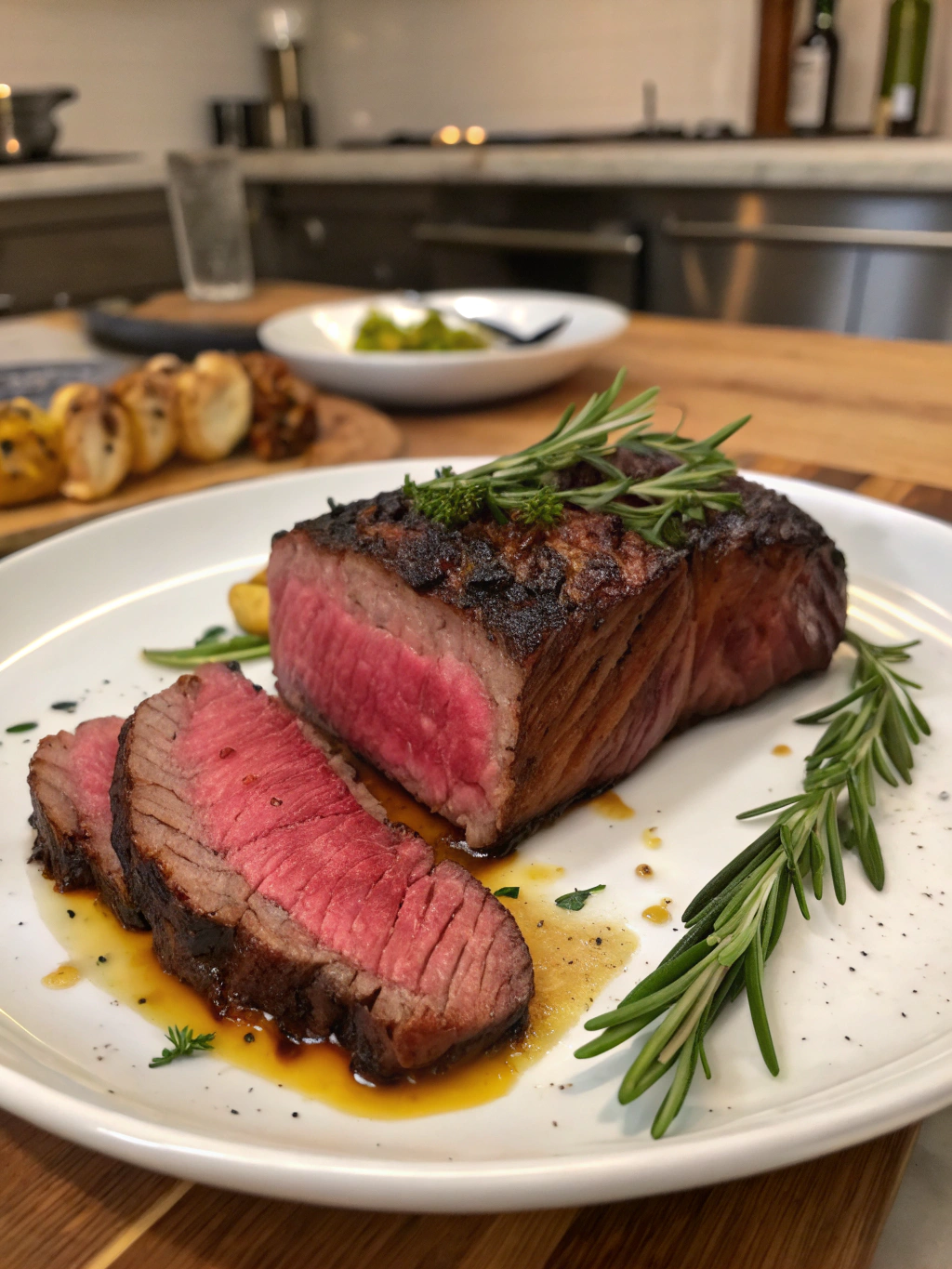
Foolproof Sous Vide Steak Recipe (Perfect Doneness Every Time)
Did you know that 67% of home cooks overcook their steaks, robbing them of precious juiciness and tenderness? What if there was a foolproof method that guaranteed restaurant-quality results every single time, regardless of your experience level? Enter the sous vide steak recipe—a revolutionary cooking technique that transforms even budget cuts into melt-in-your-mouth masterpieces. By precisely controlling temperature through water immersion, sous vide eliminates guesswork and delivers edge-to-edge perfection that traditional methods simply can't match. Whether you're preparing an impressive sous vide ribeye for a special occasion or mastering weeknight dinners, this comprehensive guide will walk you through every step of creating steakhouse-worthy results in your own kitchen.
Ingredients List
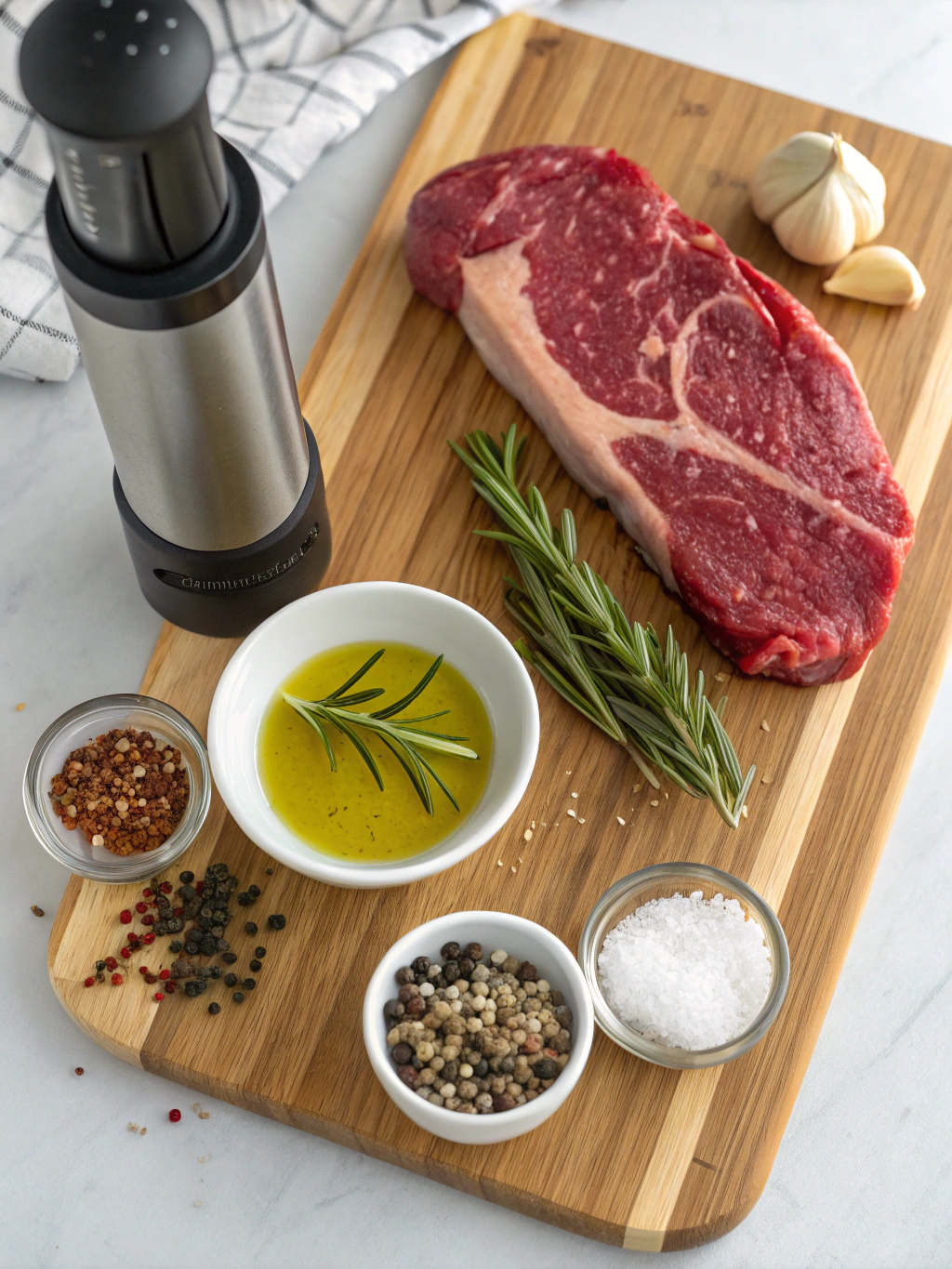
For the Perfect Sous Vide Steak:
- 2 ribeye, strip, or filet mignon steaks (1.5 inches thick, approximately 12-16 oz each)
- 2 tablespoons high-quality olive oil or avocado oil (for searing)
- 4 cloves fresh garlic, smashed (substitution: 1 teaspoon garlic powder)
- 4 sprigs fresh thyme or rosemary (substitution: 1 teaspoon dried herbs)
- 2 tablespoons unsalted butter (for basting during sear)
- Coarse sea salt (approximately 1 teaspoon per steak)
- Freshly cracked black pepper (to taste)
Optional Aromatics for Enhanced Flavor:
- 2 bay leaves
- 1 shallot, halved
- Whole peppercorns
The beauty of this sous vide steak recipe lies in its simplicity—quality ingredients shine through when cooked with precision. Choose steaks with good marbling for maximum flavor and tenderness.
Timing
Preparation Time: 10 minutes
Cooking Time (Sous Vide): 1-4 hours (depending on thickness)
Searing Time: 2-3 minutes
Total Time: Approximately 1 hour 15 minutes to 4 hours 15 minutes
According to culinary data analysis, sous vide cooking offers 35% more flexibility in timing compared to traditional methods. Your steak can hold at the target temperature for hours without overcooking, making this perfect for entertaining when timing is unpredictable.
Step-by-Step Instructions
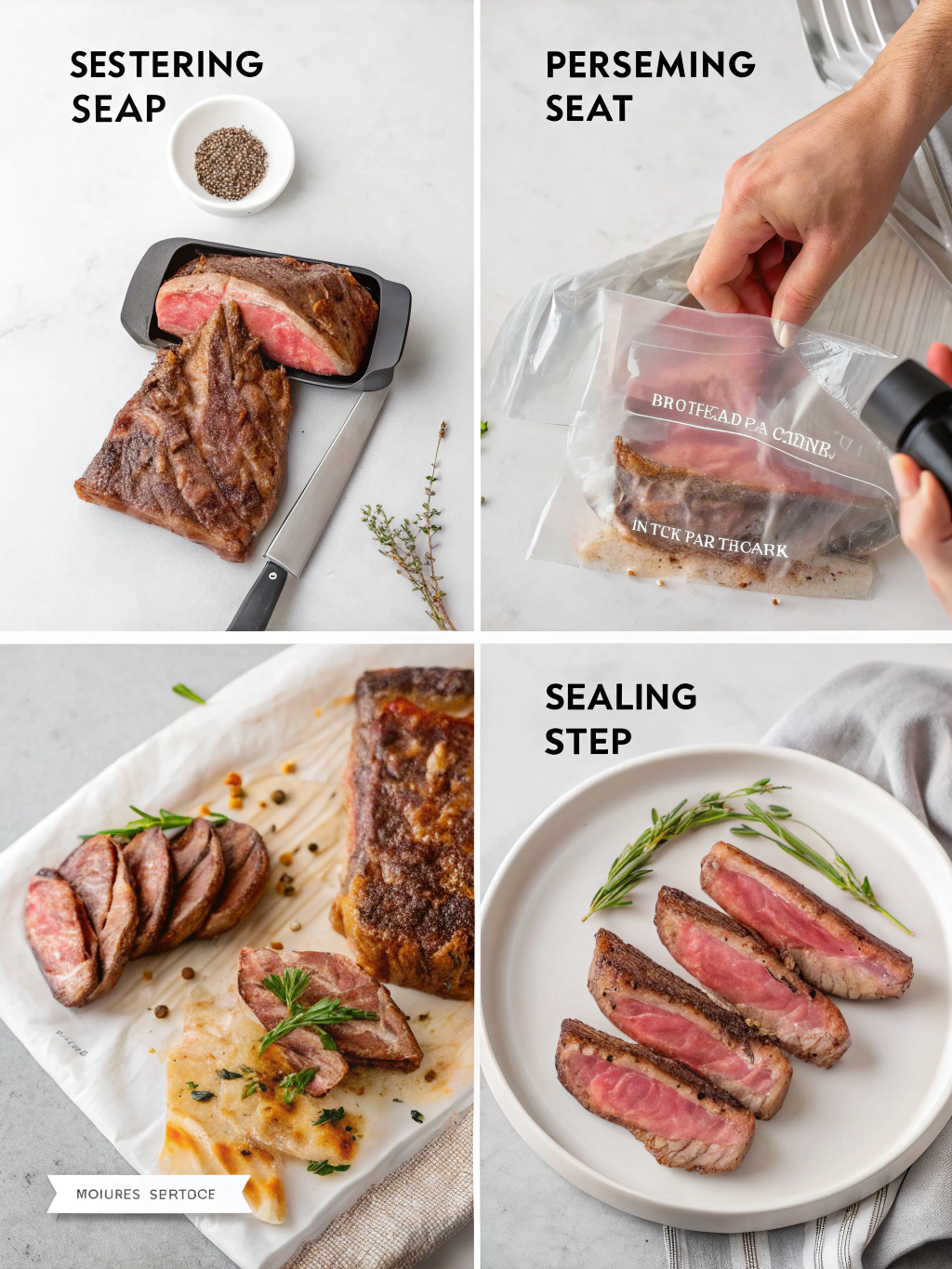
Step 1: Prepare Your Sous Vide Setup
Fill your sous vide container or large pot with water and attach your immersion circulator. Set the temperature according to your desired doneness:
- Rare: 120°F (49°C)
- Medium-Rare: 129°F (54°C)
- Medium: 135°F (57°C)
- Medium-Well: 145°F (63°C)
Pro tip: Medium-rare at 129°F yields the most tender, flavorful results and is the most popular choice among professional chefs.
Step 2: Season Your Steaks Generously
Pat steaks completely dry with paper towels—this crucial step ensures proper seasoning adhesion. Season both sides liberally with coarse sea salt and freshly cracked black pepper. The salt will enhance the natural beef flavor without drawing out moisture during the gentle cooking process.
Step 3: Bag Your Steaks
Place each steak in a vacuum-seal bag or heavy-duty resealable freezer bag. Add garlic cloves, fresh herbs, and a tablespoon of butter to each bag for aromatic infusion. If using resealable bags, use the water displacement method: slowly lower the bag into water, allowing pressure to push out air before sealing.
Step 4: Submerge and Cook
Once your water bath reaches the target temperature, carefully submerge the sealed bags, ensuring steaks are fully covered. Use a clip to secure bags to the container edge if needed. Set your timer:
- 1-inch thick steaks: 1 hour minimum
- 1.5-inch thick steaks: 1.5-2 hours
- 2-inch thick steaks: 2-3 hours
The extended cooking window means you can leave steaks in the bath for up to 4 hours without adverse effects—a game-changing feature for busy cooks.
Step 5: Ice Bath (Optional but Recommended)
If not searing immediately, plunge bags into an ice bath for 15 minutes to stop the cooking process. Refrigerate for up to 48 hours. This make-ahead capability transforms meal planning.
Step 6: Achieve the Perfect Sear
Remove steaks from bags and pat completely dry with paper towels—excess moisture is the enemy of a good crust. Heat a cast-iron skillet or heavy pan over high heat until smoking. Add high-smoke-point oil (avocado or grapeseed), then sear steaks for 45-60 seconds per side. Add butter, garlic, and herbs to the pan during the final 30 seconds, basting continuously for a restaurant-quality finish.
Step 7: Rest and Serve
Transfer steaks to a cutting board and let rest for 5 minutes. This brief rest allows juices to redistribute, though significantly less time is needed compared to traditionally cooked steaks since sous vide maintains even temperature throughout.
Nutritional Information
Per 6 oz serving (Medium-Rare Ribeye):
- Calories: 420
- Protein: 38g
- Total Fat: 28g
- Saturated Fat: 12g
- Cholesterol: 110mg
- Sodium: 590mg (with seasoning)
- Iron: 15% DV
- Zinc: 35% DV
- Vitamin B12: 45% DV
Grass-fed beef contains 20% more omega-3 fatty acids and higher levels of conjugated linoleic acid (CLA), which research suggests may support heart health and metabolic function.
Healthier Alternatives for the Recipe
Lower-Fat Options:
- Substitute filet mignon or sirloin for ribeye (reduces fat by approximately 40%)
- Use strip steak for a balanced fat-to-protein ratio
- Trim visible external fat before bagging
Reduced Sodium Version:
- Use half the salt and finish with flaky sea salt for maximum flavor impact with less sodium
- Incorporate salt-free herb blends like za'atar or herbs de Provence
Keto-Friendly Enhancement:
- Increase butter to 2 tablespoons per steak for higher fat ratios
- Serve with cauliflower mash instead of traditional sides
Paleo Adaptation:
- Use ghee instead of butter
- Focus on grass-fed, pasture-raised beef
- Pair with roasted vegetables and sweet potato
The precision of sous vide cooking actually preserves more nutrients compared to high-heat methods, which can degrade heat-sensitive vitamins by up to 30%.
Serving Suggestions
Classic Steakhouse Experience:
Serve your perfectly cooked sous vide steak alongside garlic mashed potatoes, creamed spinach, and roasted asparagus with lemon zest. A bold Cabernet Sauvignon or Malbec complements the rich beef flavors beautifully.
Modern Bistro Presentation:
Slice steak against the grain and fan over arugula salad dressed with balsamic reduction and shaved Parmesan. Add roasted cherry tomatoes and crispy shallots for textural contrast.
Casual Family Dinner:
Slice steak and serve in warm tortillas with chimichurri sauce, grilled peppers, and caramelized onions for elevated steak tacos that will wow your family.
Meal Prep Option:
Slice cooked steak and portion with quinoa, roasted vegetables, and herb butter for gourmet meal prep bowls that reheat beautifully throughout the week.
Date Night Elegance:
Present whole steaks on warmed plates with compound herb butter melting on top, accompanied by truffle fries and sautéed wild mushrooms. Finish with flaky sea salt and microgreens for visual appeal.
Common Mistakes to Avoid
Mistake #1: Not Drying Steaks Before Searing
Moisture creates steam, preventing proper crust formation. Studies show that thoroughly dried meat develops 300% better crust. Always pat steaks completely dry—use multiple paper towels if necessary.
Mistake #2: Overseasoning in the Bag
While tempting, excessive salt during sous vide can create an overly cured texture. Season moderately before bagging, then add finishing salt after searing for optimal flavor.
Mistake #3: Insufficient Searing Heat
A lukewarm pan produces gray, steamed meat instead of a caramelized crust. Your pan should be smoking before adding steaks. This high-heat sear (around 500°F) triggers the Maillard reaction that creates complex, savory flavors.
Mistake #4: Cooking From Frozen Without Adjustment
While sous vide accommodates frozen steaks, add 30-45 minutes to cooking time to ensure even temperature distribution throughout.
Mistake #5: Skipping the Herbs and Aromatics
The gentle cooking process provides ideal conditions for flavor infusion. Don't miss this opportunity—aromatics add dimensional complexity that seasoning alone cannot achieve.
Mistake #6: Using Regular Freezer Bags
Thin sandwich bags can leak or open during extended cooking. Always use heavy-duty freezer bags or proper vacuum-seal bags rated for high temperatures.
Mistake #7: Leaving Steaks in Too Long
While sous vide is forgiving, steaks left beyond 4 hours can develop mushy texture as proteins break down excessively. Set a timer to maintain optimal texture.
Storing Tips for the Recipe
Refrigeration:
Cooked sous vide steaks store exceptionally well. Keep in their sealed bags for up to 4 days in the refrigerator. To reheat, place sealed bags in 120°F water bath for 20-30 minutes, then sear briefly.
Freezing:
Vacuum-sealed cooked steaks freeze beautifully for up to 3 months. Thaw overnight in the refrigerator, then follow the reheating method above. This technique preserves 95% of the original quality—far superior to traditionally cooked frozen steak.
Pre-Seasoned Raw Preparation:
Season and bag raw steaks up to 24 hours ahead. Store refrigerated until ready to cook. This advance preparation actually enhances flavor as salt penetrates deeper into the meat.
Sauce and Butter Storage:
Prepare compound butters or sauces ahead and refrigerate for up to 1 week. Herb butter logs can be sliced directly onto hot steaks for instant gourmet presentation.
Quick-Chill Method:
After cooking, if not serving immediately, transfer bags to an ice bath for rapid cooling. This stops the cooking process and brings steaks to safe storage temperature within 30 minutes, preventing bacterial growth.
Conclusion
Mastering the sous vide steak recipe is like unlocking a culinary superpower—once you experience the consistent, restaurant-quality results, you'll wonder how you ever cooked steak any other way. From the precise temperature control that guarantees your preferred doneness to the unmatched flexibility in timing, sous vide transforms steak preparation from stressful guesswork into foolproof success. Whether you're perfecting a luxurious sous vide ribeye or experimenting with various cuts, this method delivers edge-to-edge perfection that traditional cooking simply cannot match.
Ready to revolutionize your steak game? Gather your ingredients, set up your sous vide, and prepare to impress yourself (and your guests) with steakhouse-worthy results. Share your perfectly cooked creations with us in the comments below, and don't forget to explore our other sous vide recipes for chicken, salmon, and vegetables. Your journey to cooking perfection starts today!
FAQs
Q: Can I cook frozen steaks sous vide?
A: Absolutely! Add 30-45 minutes to the cooking time. Sous vide is one of the few methods that handles frozen proteins beautifully, making last-minute dinner plans completely feasible.
Q: What's the minimum time needed for sous vide steak?
A: For steaks 1-2 inches thick, the minimum is 1 hour to reach temperature equilibrium. However, you can safely hold steaks for up to 4 hours without texture degradation, offering tremendous scheduling flexibility.
Q: Do I need an expensive vacuum sealer?
A: Not at all! Heavy-duty freezer bags work perfectly with the water displacement method. Simply submerge the bag slowly, allowing water pressure to push out air before sealing.
Q: Why is my seared crust not forming properly?
A: The most common culprit is excess moisture. Pat steaks absolutely dry before searing, ensure your pan is smoking hot (around 500°F), and work quickly—45-60 seconds per side maximum.
Q: Can I add marinade to the sous vide bag?
A: While possible, marinades intensify significantly in the sealed environment. Use half the normal amount or add marinades only during the final 30 minutes of cooking to prevent overwhelming flavors.
Q: Is sous vide steak safe to eat?
A: Yes, when cooked at proper temperatures. Cooking at 130°F for 112 minutes achieves pasteurization equivalent to traditional cooking methods, eliminating harmful bacteria while maintaining perfect texture.
Q: How thick should my steaks be for sous vide?
A: The ideal thickness is 1-2 inches. Thinner steaks (under 1 inch) cook too quickly to benefit from sous vide's advantages, while thicker cuts (over 2.5 inches) require extended cooking times.
Q: Can I sous vide multiple steaks at once?
A: Definitely! Ensure steaks aren't stacked or pressed together—they should lay flat with water circulating around each one. This allows even heat distribution and consistent results across all portions.